I’m sorry if this post doesn’t completely fit the usual tone of this subreddit — feel free to remove it if needed. I’m sharing it simply because my nerdy self can’t help but explore beyond and into the deeper sense that there’s still immense power buried in forgotten knowledge, resources we can’t yet access because of limited tonalic information access.
I’ve been formally studying cultural anthropology for about seven years, and that is what first nudged me to practice what I was reading in the works of Carlos Castaneda - instead of just analyzing them intellectually. Eventually, I found this subreddit, and to my surprise, it became a rare space where people discuss direct practices without dogma or folklore.
Carlos’s work was practice-based too, but this community has done an amazing job of distilling the essential, leaving aside unnecessary mystification. For that, I’m genuinely grateful.
Since I started engaging in the conversations (and not just quietly lurking from the shadows), I’ve realized how much practical knowledge might still lie hidden in the legacy of both the old and the new seers.
Mexico and Central America hold a particularly rich reservoir of this wisdom - born from conditions unlike any other region. These were ancient mother civilizations, developing in isolation from their neighbors, which allowed them to evolve a bit more inwards - focusing on art and philosophy rather than endless war and territorial defense.
Information about the history and practices of the ancients from these lands now a days is almost impossible to access. The criollo universities of Mexico, the same elite institutions that inherited colonial academic structures, tend to push a yellow, sensationalist anthropology, obsessed with producing simplified narratives that fit modern academic trends only and avoid the facts.
The result is a system that still operates under the intellectual shadow of colonialism , a third-world study system that rewards conformity, not insight.
To truly understand the roots of what we practice today, one must go back to the source texts aka the writings of the 16th-century informants and the preserved works of the actual native scribes, whether Maya or Central Mexican. But to read these authentically, you need to understand Classical Nahuatl and Classical Maya - the original sacred phases of those languages.
Modern speakers of Nahuatl or Mayan dialects often cannot understand their own ancestral writings, since the grammar, symbols, and spiritual lexicon have shifted drastically. That’s why serious research must be done in collaboration with linguists and native scholars who can bridge that gap.
Most people don’t realize this, but nagualismo didn’t just “appear” with Castaneda, it’s a refined legacy of a very ancient current that once ran through the heart of Mesoamerican civilization.
Roughly six to five thousand years ago, seven “mother civilizations” emerged around the world. Two were in the Americas — Anáhuac (that extended from the Great Lakes down to Nicaragua) and Tahuantinsuyu (the Andean world). The others — Mesopotamia, Egypt, China, India, and Minoan Crete — were all clustered close together, and that proximity led to constant wars, dogmas, and the creation of exclusive priesthoods.
In those regions, only the priest could speak to the divine; everyone else was expected to obey. Shamans aka anyone interested in perceiving outside the established, were exiled into deserts and mountains, and later, hunted and burned during the Middle Ages. Most of that ancient experiential knowledge, the raw science of perception, was erased.
But in the Americas, things unfolded differently. The great distance between civilizations allowed traditions to coexist without the need for dogmatic control. As a result, shamans were not outcasts — they became part of society itself to a certain extent and even respected as a priestly class.
Among the Maya, the nagual was called Wai, “the dreamer.”
Among the Nahua, Nawalli, “the wise one,” which the Spanish later turned into nagual.
But nagualismo became in fact shamanism refined by civilization, a science developed in monasteries and schools, organized into lineages of knowledge called Nahualmekayotl. These were fraternities where knowledge of perception was tested and verified through direct experience.
If we used modern language, we could say the naguales were explorers of consciousness long before the term existed.
Everything changed with the invasion of the Americas. The Spanish clergy saw nagualismo as dangerous heresy. To survive, the nahuales destroyed large parts of their tradition, keeping only the essentials. They developed secret languages — Nahuali’toa (among the Nahua) and Suyuat’an (among the Maya) — and formed hidden circles of practitioners to keep the lineages alive.
By the 19th century, nagualismo was still recognized by some anthropologists as a living current of ancient knowledge. Daniel Brinton wrote:
“In recent centuries, nagualismo has been recognized as a powerful cult whose members possess strange faculties, preserving until our own days the thought and ritual of a long-suppressed wisdom.”
But as the 20th century rolled in, the rise of materialism and Eurocentric anthropology buried it again, until 1968, when Carlos Castaneda unexpectedly reopened the door and reminded the world that the nagual was never gone, but only gone silent.
To be continued maybe…
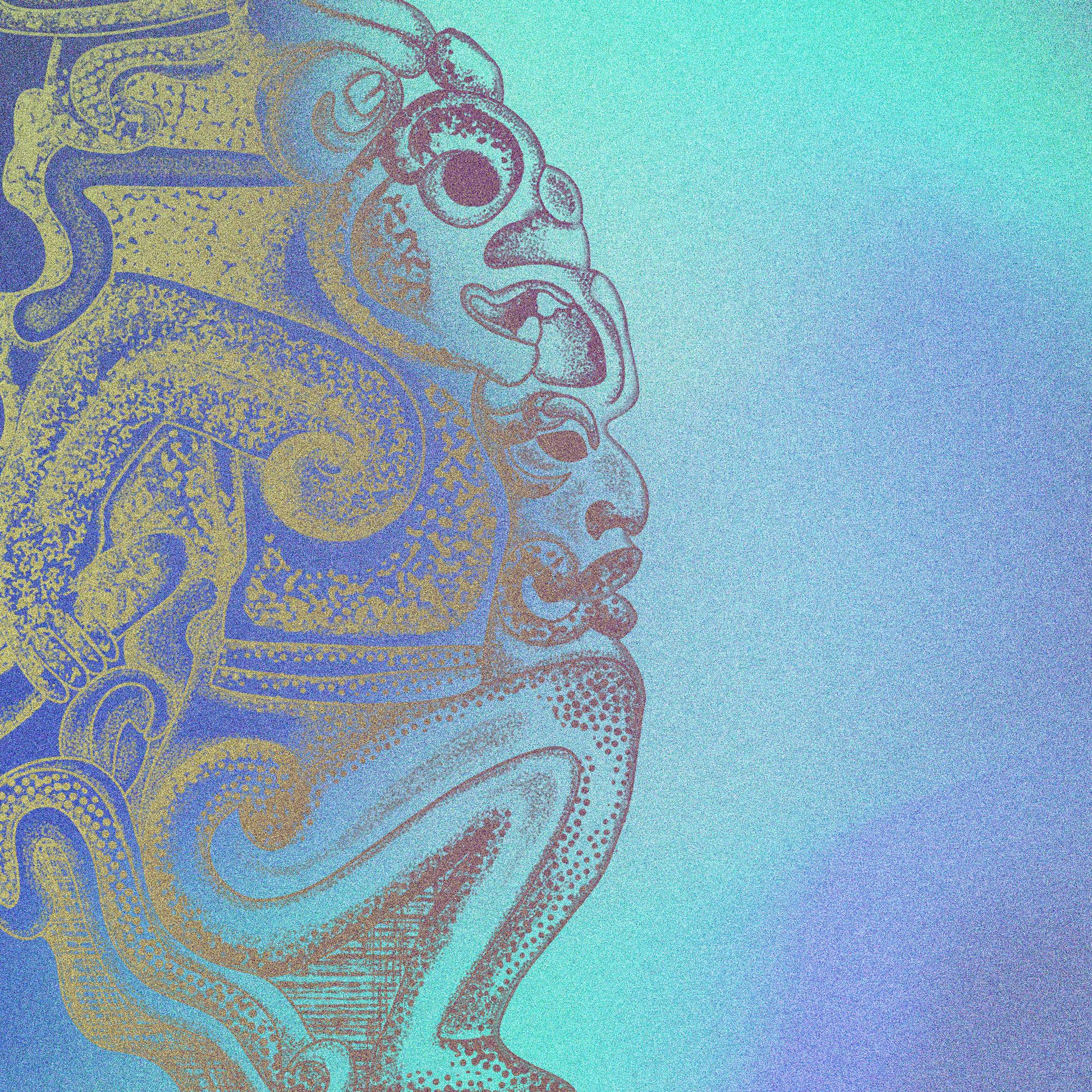
Image drawn by me in Procreate based on the Olmec were-jaguar relief.
46 Comments
Fascinating!
Are there any writings from the nagualismo or any documents written in the secret languages you mentioned?
Of course, among the maya there was The Book of Suyua. The original version was a compilation of at least three manuscripts that are now lost.
The book consists of questions and answers. Almost all of the questions contain an apparent key of culinary nature, which is mentioned explicitly, and a hidden esoteric key, only hinted at through wordplay, cosmological allusions, and mythic references.
Together with the Ritual of the Bacabs, the Hidden Words belong to a distinct literary category: the Books of Suyua, an inventory of the most important forms of knowledge within Maya society. This type of literature has a counterpart in the Nahua region, preserved in the medical incantations collected by Father Alarcón, which suggests that it was a shared institution among Mesoamerican cultures. Of course this was not aimed at the normal population, but it was passed down. There is a passage in Suyua 3 which hints at something similar to darkroom, a practice that must be done in the dark and at night. They used to name them "nocturnal flowers", the midnight practices.
Do you have a link to The Book of Suyua?
I am having a hard time finding it online.
because its AI generated bs
I am truly afraid for the future of humanity, we will soon retrocede to the intellect of a rodent...
I'm also afraid for humanities future. Pack rats and squirrels that I'm familiar with have a superb awareness of predators while humans have literally none. We don't have much time. I don't have much time.
Yes, I have it in paper if you are really interested I can scan as much as I can, is in mayan and spanish, but I assume any program now can translate from image, send me message if you really want it. I also have some facsimile.
Yes please, I would love to get a copy! There are some services online that I can use to translate the images.
Have you read The Nagualist Newsletter? issue 1 page 4...
the paper Don juan called "pure nonsense"?
https://www.reddit.com/r/castaneda/comments/1lgcolt/new_pdf_of_all_5_original_issues_of_the_nagualist/?share_id=pXFL1PIYUF7yLVIru11BX&utm_content=1&utm_medium=ios_app&utm_name=ioscss&utm_source=share&utm_term=1
Yes and Don Juan was spot on! I found it some time ago while scrolling though the PDF resources.
Interesting write up! Do you have a source to back up your claim that Anahuac civilization reached far north to the great lakes? Also, the Tahuantisuyo didn’t exist 5 or 6 thousand years ago; they were more recent, started by Manco Capac somewhere around the 1200’s; but it would be like 1438 before the Inca would begin their conquest of surrounding regions and form the Tahuantisuyo.
A couple of years ago i had the opportunity to visit the Q’ero community outside Cuzco, and during a meeting oneof the Q’eros talked about a demigod, someone he referred to as el amasador de las rocas, as the mentor responsible for setting up the events that led to the founding of the inca, through Manco Capac - the Q’ero also gave the same date approximately 1200 AD.
back to the topic of Mexico before Mexico, there is a history professor in Hermosillo who has one of the most interesting work out there - his name is Eric Cardenas. I don’t agree 100% with some of his take about Porfiriato, glossing over the atrocities committed against the Yaquis, for example.
Thanks for the comment! And yes, the Tawantinsuyu as an organized state didn’t exist 5,000 or 6,000 years ago. My idea wasn’t that the Inca Empire itself goes back that far, but rather that when we talk about these ancient regions, we should use the names their own civilizations used, like Tawantinsuyu instead of “Andean region,” or Anáhuac instead of “Mesoamerica.”
In that sense, I was referring to the territories and cultural expansion both of which are part of the much older matrix of American civilization.
About Anahuac and the Great Lakes. That's a great question! The idea isn’t that the Anáhuac civilization had rigid political borders reaching that far north, but rather that its sphere of cultural and cosmological influence extended deep into the continent.
As some researchers have noted, the borders of Anáhuac were not political but astronomical. That means they weren’t defined by arbitrary lines on the ground, but by natural lines projected by the movement of the stars across the Earth, such as the equator, the tropics, and the latitudes connected to calendrical phenomena, like the line dividing the year into cycles of 105 and 260 days, or the latitude marking the zenithal passage of the sun on key calendar dates.
Geographically, Anáhuac was centered around what was called the vigesimal longitude and latitude, roughly near 18° north, where the Olmec placed their capitals. Its nuclear area extended up to the Tropic of Cancer, but its cultural reach was continental, stretching from Central America to the central United States.
Cahokia, located north of the Mississippi River, is a good evidence of that broader influence. While it wasn’t part of Mesoamerica politically, it clearly shared cosmological and ceremonial patterns such as solar-aligned pyramidal structures, the worship of the four directions, the world-tree and serpent iconography, and ritualized games, all central elements in the science of Anáhuac.
Love the info you just shared! If I’m not mistaken, the book I am reading now by CC,The Fire from Within, Don Juan gives Carlos some history on Toltec tradition. I am new to the group and really glad I found this group.
Thank you for your appreciation, but that is a common misunderstanding, the knowledge in the books of Carlos is not Toltec tradition, or any tradition for that matter, not in the sense we know it. Don Juan actually made it clear that his teachings are not pertinent to any ethnic group, is why it was so easy for Carlos's detractors to attack him, because in his first books he made emphasis on the Yaqui, then they started to attack him, saying there is no such tradition between Yaquis, the matter is a bit more complex and requires some pretty strong historical study to be able to place the nuclear zone of the teachings in some point of time and space, is a work in progress :)
Where do you think the teachings came from?
It’s not the same thing to say “forgotten knowledge” as to say “things anthropologists don’t know.” To me, that’s just a romanticized view of Mexico — a pretext to keep wasting energy digging through dry sources instead of practicing sorcery and seeing it with our own eyes.
Civilizations from six thousand years ago? In terms of sorcery, I don’t care about any Mesoamerican civilization that used a nahual concept divided into twenty symbols, since that was undoubtedly the work of the "men of knowledge", who fractured the nahual into twenty conceptual symbols for the spiritual governance and control of the societies they themselves created. But the sorcery I’m interested in happened before that…
Study Classical Nahuatl? Seriously? Let the tourists who come to study in Mexico fall for that. I’m a speaker of a modern, living form of Nahuatl. So it’s clear to me that “Classical Nahuatl” isn’t a real language — it’s a linguistic compilation made by Spanish monks in the 16th century. No native speaker who isn’t getting paid by academia wants to speak that synthetic language, because it’s dead. Wanting to learn it is like wanting to learn formal Latin when no one but academic nerds can speak it — it’s like getting certified in Spanish writing with English teachers... It makes no sense! The real, living Nahuatl is the one spoken in the markets of Nahua towns across central and southern Mexico, and I assure you there’s real magic there — just like in Cholita’s modern spells.
We don’t even know what languages were spoken eight thousand years ago in Mesoamerica, nor the names of dozens of cultures and settlements scattered from the coast of what is now California all the way to central Mexico. So we still need to dig deeper into the earth before claiming anything for sure...
Your writing feels strange — as if you were trying to impress the gullible — as if new anthropologists had already discovered everything just because they read Carlos and incorporated the word nahualli into their studies. Maybe they think that by collecting stories about nahualismo, they’ve unraveled the mysteries of practices like lycanthropy or the use of the double... I take that as a good omen, but it’s not sorcery. Your text seems imbued with the “Toltec fervor” currently sweeping through Mexico — driven by politicians, spiritual leaders, and academic researchers, not by serious sorcery practitioners who can actually summon their doubles and change shape.
Believing we’ve understood the past, speaking like enlightened historians, or feeling that we’ve discovered the historical grail seems irresponsible to me. For decades, FAMSI made incredible progress deciphering the Maya stelae, and if there are now new findings and new visions about the Mesoamerican world, I’m glad. But we must be clear that this has nothing to do with the ancient seers — the pre-Olmec sorcerers, those who existed before the rise of the great Mesoamerican cities.
Anthropologists are always trying to “discover the black thread,” but that quest means nothing to sorcerers — who, if they really tried, might travel 250,000 years into the past.
I appreciate your vision and contribution, but I came to this site to read and discuss sorcery, and pre-Olmec sorcery can’t be studied or learned as part of anthropology. I think that’s one of the main teachings of Carlos’s first book.
If you’re an automotive engineer, you don’t study old engines to find sorcery in them — you practice real sorcery following Carlos’s instructions and then apply it to next-generation cars. If you’re a historian, you don’t look for sorcery in ancient texts — you work like a dog at sorcery until you can travel through time and see it with your own eyes.
That surely is reasonable, but has in here managed to pull it off?
The Don Genaro, back again — or did you ever leave? Don’t you believe what the practitioners here are writing?
Anyway, what does it matter if others can do it — what should matter is whether you can. You know what I mean: Deciding to practice Tensegrity in silence, in the dark room...
Well, it seems that no one in here has reached the heights of don Juan’s capabilities. At best, it seems that some practitioners are on an intermediate level, let’s say on half of the way of CC’s apprenticeship. I haven’t read that anyone has actually seen the “grid” of life or went in ancient past to experience everyday life or met someone similar to death defier. Regardless of all of that, you are right, I (not only me but everyone else as well) should be focusing on practice instead of reading complacently. Cheers
I don’t know where you’ve been, since Dan recently posted about the Olmec place: (https://www.reddit.com/r/castaneda/comments/1o30edc/olmec_remote_viewing).
At the beginning, many of us needed to abandon the “people-search” approach, replacing it with the “search for magic.”
Once you understand that, you dedicate yourself to the practice — because you stop asking, “Who can do it?” and start saying: “I want to do it!"
Good luck with your practice!
We should be both practicing and reading.
We don’t have a senior sorcerer whispering the secrets of the universe into our ear, or shifting our assemblage point, so we must (methodically!) drill the teachings into our own skulls with our repeated efforts.
And part of that work is a cognitive restructuring against the narratives we’ve all been taught since youth.
Wow, so much passion there! Hahaha -kidding, we’re cool. And to be fair, I did say in my post they could delete it if it didn’t fit the subreddit! We all “waste” energy on what we love — like writing on Reddit, for example. What if some of us happen to enjoy both practicing and digging through dry sources in our free time?
Indeed, sorcery existed before, during, and after those civilizations and it’s still here. From my understanding, sorcery evolved alongside every step of civilization; otherwise, it would have vanished long ago. The organization of society and the practice of the nagual are two different movements, but both shape the human experience. Language evolved, intellect evolved - tools of survival that came with a cost. We gained abstraction but lost intimacy with perception. That’s the struggle of modern sorcerers: to bridge those two worlds again, instead of trying to erase one for the other.
As for Classical Nahuatl - I was referring to the classical period of a civilization, and therefore the language it used at its cultural height. So I’m not sure what you’re referring to. It’s not a “fake” language - it’s simply the refined register used by the thinkers and scribes of that time, just like Classical Greek or Sanskrit.
Of course we don’t know every language from 8,000 years ago, but through study we can trace the roots of words, symbols, and ideas that survived through generations. Civilization is always syncretic - nothing is pure. Each era inherits, transforms, or distorts what came before. That’s how continuity works.
I appreciate your perception of my intention, but I promise it’s not what you think. I’m not trying to impress anyone, and I’m definitely not an anthropologist - I’m a graphic designer and illustrator who just happens to be fascinated by these things since childhood. I have no agenda other than showing that Carlos was often ridiculed unfairly, because much of what he wrote has deep historical grounding and practical continuity. Maybe the topic feels sensitive, but my post was just a small reflection to connect dots, and to encourage more experienced practitioners to share practical insights we can all learn from.
And about “sounding like an enlightened historian” - I honestly didn’t realize I was coming across that way! I just shared a bit from my studies because I find this stuff exciting. I didn’t mean to upset anyone or be disrespectful. And yes, FAMSI’s work is great! But regarding the pre-Olmec sorcerers - if the same practices that appear in Carlos’s books also show up in ancient Mesoamerican sources, isn’t that a sign of continuity rather than separation? It’s a logical conclusion. How else would those same patterns appear across thousands of years unless there’s a shared root?
I think there’s a misunderstanding here around the word “anthropology.” I agree that official academia often operates with blinders on - it’s a system built on material logic and ego. But independent study is different. One doesn’t have to follow the “I-know-it-all” crowd to learn from history. Universities can’t teach sorcery - and if they could, they’d probably collapse from it. But an individual can walk between both worlds. What I meant in my post is simply this: the sorcery described in Carlos’s books exists in a larger cultural continuum. Those practices were described and recorded long before him - that’s fact. So what if there’s more in those old texts, things we haven’t seen yet? That’s what I was pointing to. :)
Thanks for taking the time to write this answer, is a kind of fruitful interaction.
It’s clear that sorcery survived the course of history, but in a way much subtler than culture or language — otherwise, there would be thousands of sorcerers, not just a few dozen.
Political and spiritual governance were controlled by the ruling caste of the great Mesoamerican cities. The perspective of “social evolution” doesn’t seem to me the right way to approach sorcery.
“Classical Nahuatl” is a dead language — whether it’s the Spanish monks’ version or that of the so-called “Classical period.” The fact is, there are no living speakers, and if we refer to pre-colonial Nahuatl, there aren’t even real “texts” to study, since its expression of ideas was pictographic. In that sense, I’d rather study the living variants of Nahuatl than imagine I can learn a language lost centuries ago in a university classroom. The same people who promote “Classical Nahuatl” are the worst speakers, unable to communicate with Indigenous speakers at the ground level. They’re the kind of people who say cualli tonalli and ome teotl — phrases conceived in Spanish that mean nothing except to academics and fans of Aztec culture.
I don’t think Carlos needs to be defended by trying to give historical support to his work. I believe Carlos only requires that we follow his instructions and practice daily and seriously. Is that so difficult?
I don’t care what professionals in any field think — unless they can move their assemblage points — so I’m not interested in connecting with them or trying to please them.
Why would we want historical proof of our sorcery? Would that make it more real? Our sorcery is already real — it was already recorded in jade figurines.
By the way, has anyone noticed that sort of “V” shape on the “belt” of this figurine? That symbol could mean something like “Descent through the J Curve” — and I understood that through practice in the dark room...
Could be like Zuleica's harp strumming technique, he's strumming the place of the 2nd attention spot? Just in a different way, maybe with the palms facing the stomach, I've no idea, but just wondering...
I like the sculpture of the chacmool (least I think it's a chacmool) she turned her head 90 degrees and has a bowl on her stomach. I reckoned the bowl was a bit like those silence stones and you can hear the inner sound easy when your head is at 90 degrees.
Interesting. The figurine looks to me like a shape-shift into a bat, for which the assemblage point has descended into the deep red zone…
The Chacmool, present from Tula to Chichén Itzá, seems to me like an “offering intermediary”, though I suppose that bowl could hold many different things…
I think you're right, cos I read that somewhere else on this sub. I just couldn't get why the Chacmool's head is turned so far.
I asked ChatGPT what it thinks about it — look what it says:
1. Archaeological and Ritual Perspective
In most sculptures, the Chacmool’s head is turned almost 90 degrees relative to the body, as if it were glancing sideways at the viewer or toward the altar. Archaeologists from INAH and UNAM suggest that this had ritual or functional purposes:
· Watching over the altar or the sacrifice: the reclining figure may have been looking toward the temple or the priest, that is, toward the direction from which the offering came.
· Symbol of transition: by turning its head, the figure breaks the frontal axis of the human body, marking an intermediate state between the earthly and the spiritual worlds. It doesn’t look forward (toward life) nor completely backward (toward death); it gazes sideways — toward the threshold.
· Dialogue with the sky or the underworld: depending on the orientation, the gaze might be directed toward the horizon or the heavens, as if the figure were a guardian watching for something invisible to arrive.
2. Energetic or “Sorcery” Perspective
From a Castaneda energetic point of view, that neck twist immediately resonates:
· The turned head suggests a break from ordinary attention, the precise moment when the assemblage point shifts and perception opens to the unknown.
· It’s the body posture of dreaming or deep recapitulation, when the physical body remains suspended between wakefulness and sleep.
· Looking sideways or into backlight is a way of seeing from the second attention, perceiving energy directly rather than through interpretation.
You say that pre-Olmec sorcery can’t be studied or learned as part of anthropology and one of the main teachings in the first book?
Is this a common consensus among ppl knowledgeable in CC’s work? I ask cause I missed that part, or it was totally over my head at the time.
I don’t think there should be any “consensus” among those of us who read Carlos — beyond the shared need to carry out the practices described in his books. From the early works, I understood that Carlos approached Don Juan as an anthropologist, but Don Juan redirected him toward practical sorcery... I suppose he had to forget his sheets of socioeconomic surveys while searching for the right spot in the darkness...
“Common consensus” is me wondering if there’s shared/unified understanding of Olmec/Toltec history within the community that everybody agrees on. Just a term. Maybe not a good one….
Ah, okay — now I get you! I don’t think such a unified understanding of Olmec history exists, either inside or outside this community, since I believe there’s still a lot of archaeological research needed before we can reach any real consensus about it...
In the meantime… we’ve got this incredible technology! So we can study, theorize, and debate — but I also think we could try for some “visits to other times” or “conferences” about it in Silent Knowledge...
There’s very little Toltec/Olmec info. Most of what we do know comes from CC, OR what i know comes from CC and this sub.
Man…..SK! You’re right. Through which possibilities are endless.
I binge watched a number of videos by Sr. Artemio Solis, (aka Calpulli Moxicuentla) and couple of women , and they showed one of the passes for inner silence from the westwood series - the one where you massage part of the index finger with part of the thumb; except they nested that movement into a bunch of rituals involving some goddess.
It’s true that they were so stuck in the ritual that they ‘forgot’ the real magical pass.
Otherwise, if you speak spanish, but want to hear modern day Nahuatl language; these folk from Milpa Alta will not disappoint.
They seemed to be immersed in rituals that are wayy yyyy too steeped in Tenoch…
but interesting to watch what they have to say & sadly sometimes they make comparisons to ‘chakras’ which kind of turns me off a bit.
>you need to understand Classical Nahuatl
Which is surprisingly pleasant to hear.
I'm a big fan of languages.
Some languages are very harsh, and even "ugly".
Hebrew is one I find unpleasant to hear.
But english is rather messy too, and often quite harsh.
Korean is annoying...
They bow just as far when they speak.
A Korean cult moved in next door to my business... Selling Daoist style longevity potions.
Is an acquired taste, I found it weird at first, now I've grown to like it, especially when someone with a soothing voice speaks it fluently. I love farsi and greek and swahili, although I don't speak any of them :D Good luck with the Koreans, I only like their skin care.
By “formally studying” do you mean professionally, as in your an academically trained anthropologist, or other professional working in a related field that is studying anthropology?
Sorry for late replay, busy week, yes formal and independent study because formal can only take you so far unfortunately. I cannot do anything, nor have any interest in doing anything for anyone that doesn't question the narratives handed down by our society, I am curious, I wanna sharpen my intellect as well as my free perception, I have no problem in trying to do both. You can be a sorcerer with studies, but you can’t be a sorcerer with fear. Don’t be afraid of learning.
Thats a lot of words, but I wish you all the best.
I apologise for my blabbering :D
No apology necessary. You’re doing something of interest and sharing your findings.
Please! Keep going... or write a book about the subject.
Will share some more nuggets from my findings soon, glad it helped!
this reads like AI (US-style chirpy ingratiation ect...)
OP "hallucinates" in a reply below
"Of course, among the maya there was The Book of Suyua."
Wtf and why do people on this sub seem to love AI so much?
always funny to see people converse with AI slop though
First, the artwork is beautiful. Second, you have done a nice tracing of the evolution of the nagual, of the tonal of the times.
Thank you for your kind appreciation!